With information at our fingertips, and an algorithm that knows us a little too well, we can begin to feel overwhelmed with the amount of information influencers are spewing about pregnancy. After reading this blog, you should have a clear understanding of how to best prepare your pelvic floor for pregnancy and childbirth.
Pelvic floor muscle function
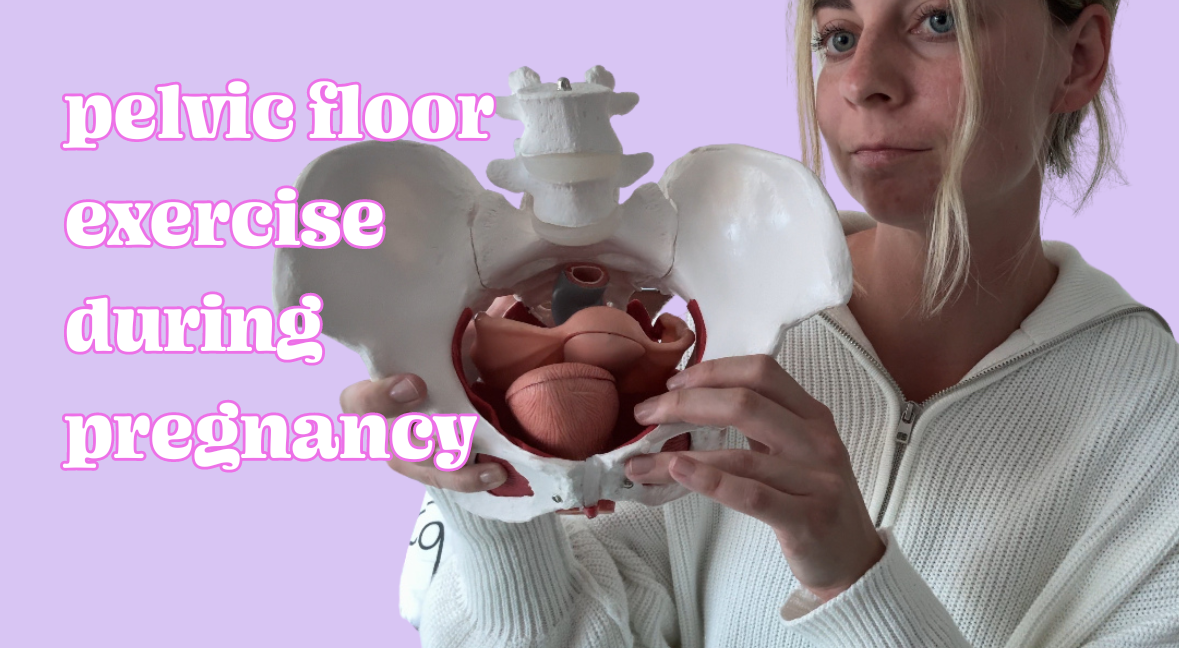
First and foremost, you must understand what your pelvic floor is. Your pelvic floor is a group of muscles that sit at the base of your pelvis. They provide support to your bladder, uterus, rectum, and your bony pelvis. Surrounding all three holes: the urethra, vagina, and rectum, your pelvic floor maintains bladder and bowel control and sexual function. A dysfunction in your pelvic floor can present as urine leakage, bladder or bowel urgency, constipation, and pain with intercourse just to name a few.
Role of pelvic floor during pregnancy and childbirth
Therefore, your pelvic floor plays a critical role in both pregnancy and childbirth. Throughout pregnancy, we need our pelvic floor to remain strong as our uterus and fetus continue to grow, putting extra weight and pressure down on the pelvic floor. A weak pelvic floor can lead to pelvic floor dysfunction at any point in your pregnancy.
Now, when it comes time for childbirth, you need a flexible pelvic floor. When you think about the anatomy of your pelvic floor, it surrounds your vaginal canal. This means, if tight, can decrease its ability to stretch and allow for passage of your baby during delivery. To clarify, your uterus pushes your baby out and your pelvic floor must relax and stretch as the baby descends the birth canal.
How to use diaphragmatic breathing to build a mind-muscle connection with your pelvic floor
Your diaphragm and pelvic floor are like best friends, they move together with every inhale and exhale you take. As you inhale, the diaphragm moves down to accept air, pelvic floor naturally follows. Then, as you exhale, the diaphragm moves up to push air out, pelvic floor naturally follows. So, let’s practice! Inhale through your nose for a count of 3, expanding your belly and ribs 360 degrees, and feel your pelvic floor lengthen down towards your toes. Exhale through pursed lips (naturally engages your deep core) for a count of 5, and contract (squeeze) your pelvic floor up, directing pressure out through your mouth.
Side note: during childbirth, you do not want to contract your pelvic floor on the exhale. This can slow down the labor process. Instead, focus only on relaxing your pelvic floor.
5 exercises better than Kegels to strengthen your pelvic floor
I’m sure you’ve been to Google Doctor and searched ‘pelvic floor strengthening exercises’ and one of the first things to come up is ‘Kegels.’ There can be a time and place for kegels, however, research shows that:
-
Bridges- 56% more effective.
-
All four hovering- 49% more effective.
-
Lunge- 42% more effective.
-
Squat- 30% more effective.
-
Clamshells- 25% more effective.
These exercises are a great place to start with your pelvic floor strengthening. However, these exercises also activate larger muscle groups such as your glutes, quads, and hamstrings, which can overpower your pelvic floor. In other words, if you have zero mind-muscle connection with your pelvic floor, you might be better off starting with isolating your pelvic floor. My preferred method is diaphragmatic breathing with a pelvic floor contraction on exhale.
Pelvic floor strengthening is great to practice throughout all of your pregnancy, with an emphasis on your first and second trimesters.
3 exercises to stretch your pelvic floor for childbirth
So, you’re probably wondering how in the world to stretch your pelvic floor. To break this down, just think of any exercise that moves your hips! Keep in consideration all three levels of the pelvis that your baby must pass through: pelvic inlet, midpelvis, and pelvic outlet. Labor stalls can happen at any level, therefore you can prepare your pelvis by opening up each level with your exercises. A few of my favorite pelvic floor stretches include:
-
Dynamic lunge to hamstring stretch
-
Adductor rock backs
-
90/90s
Pelvic floor stretching is great to practice throughout all of your pregnancy, with an emphasis on your third trimester.
Conclusion:
Your pelvic floor is like any other muscle, it needs to be strong, yet flexible for optimal function. You can focus on both strengthening and stretching your pelvic floor throughout your pregnancy. Start with diaphragmatic breathing to find your pelvic floor, then utilize this mind-muscle connection in your pelvic floor exercises.
pregnancylabor and delivery Guest User